8stars over the observatory on every Constellation caseback since 1952
6,000solid gold Centenary watches of 1948 that led to the Constellation, per Omega
4claws at 3 and 9 o'clock on the 1982 Manhattan
26Carol Didisheim's age when she joined Omega in 1980 and drew the Manhattan
- 1948 to 1952
From Centenary to series chronometer
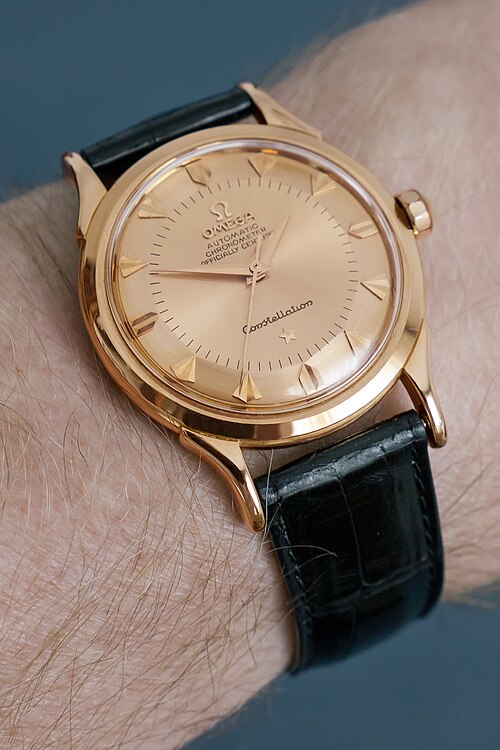
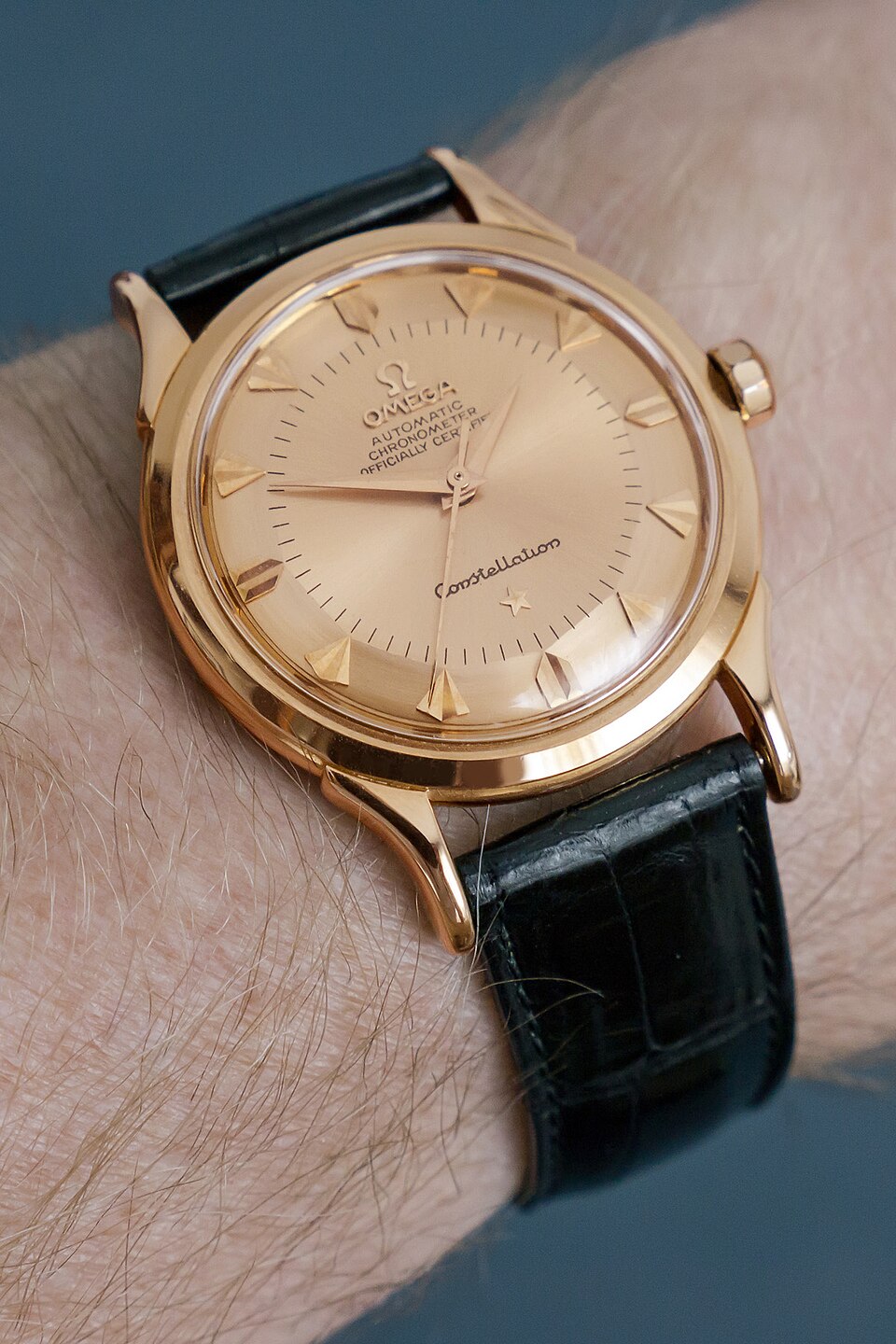
For its 100th anniversary in 1948 Omega made the Centenary, an automatic chronometer that Omega says was produced in 6,000 solid gold pieces. Its success led Omega to build a whole collection on the idea, and the Constellation followed in 1952. It was named after the eight stars above an observatory on its caseback medallion.
- 1952 to 1967
Bumper rotors and pie-pan dials
The first Constellations used bumper automatic calibres 351, 352 and 354, replaced four years later by calibres 500, 501 and 505. Many wore the twelve-sided domed dial collectors call the pie-pan. Grand Luxe and Deluxe versions often came on gold bracelets such as the Reinhor brick bracelet.
- 1964 to 1981
Integrated bracelets and early quartz
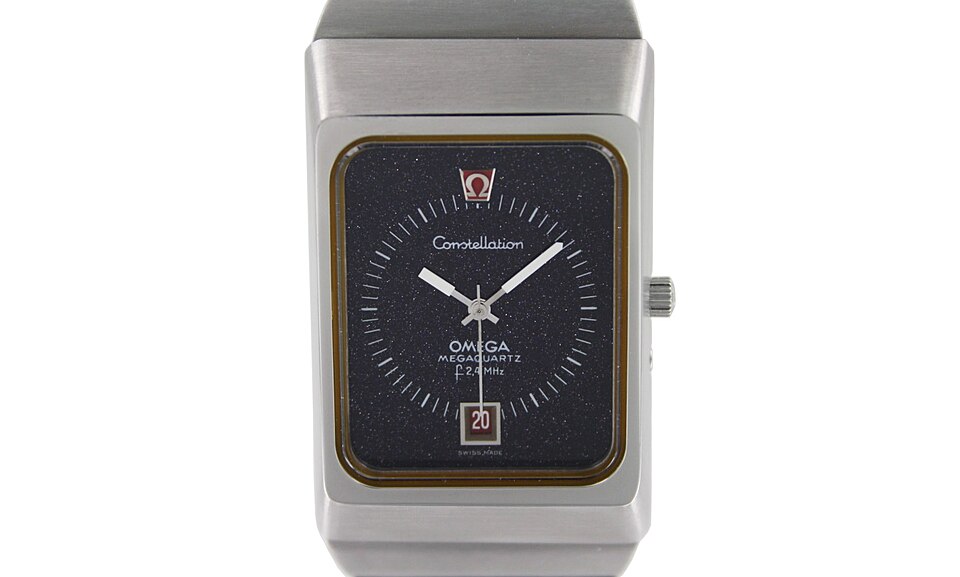
By the mid-1960s flat dials and new case shapes replaced the pie-pan. In 1969 Omega presented refs. BA 368.0847 and BA 768.0803 as the first watches with bracelets truly integrated into the case, a system patented by Pierre Moinat. At Basel in 1970 the Constellation Electroquartz arrived with the Beta 21 quartz movement.
- 1982 to 1994
The Manhattan gets its claws
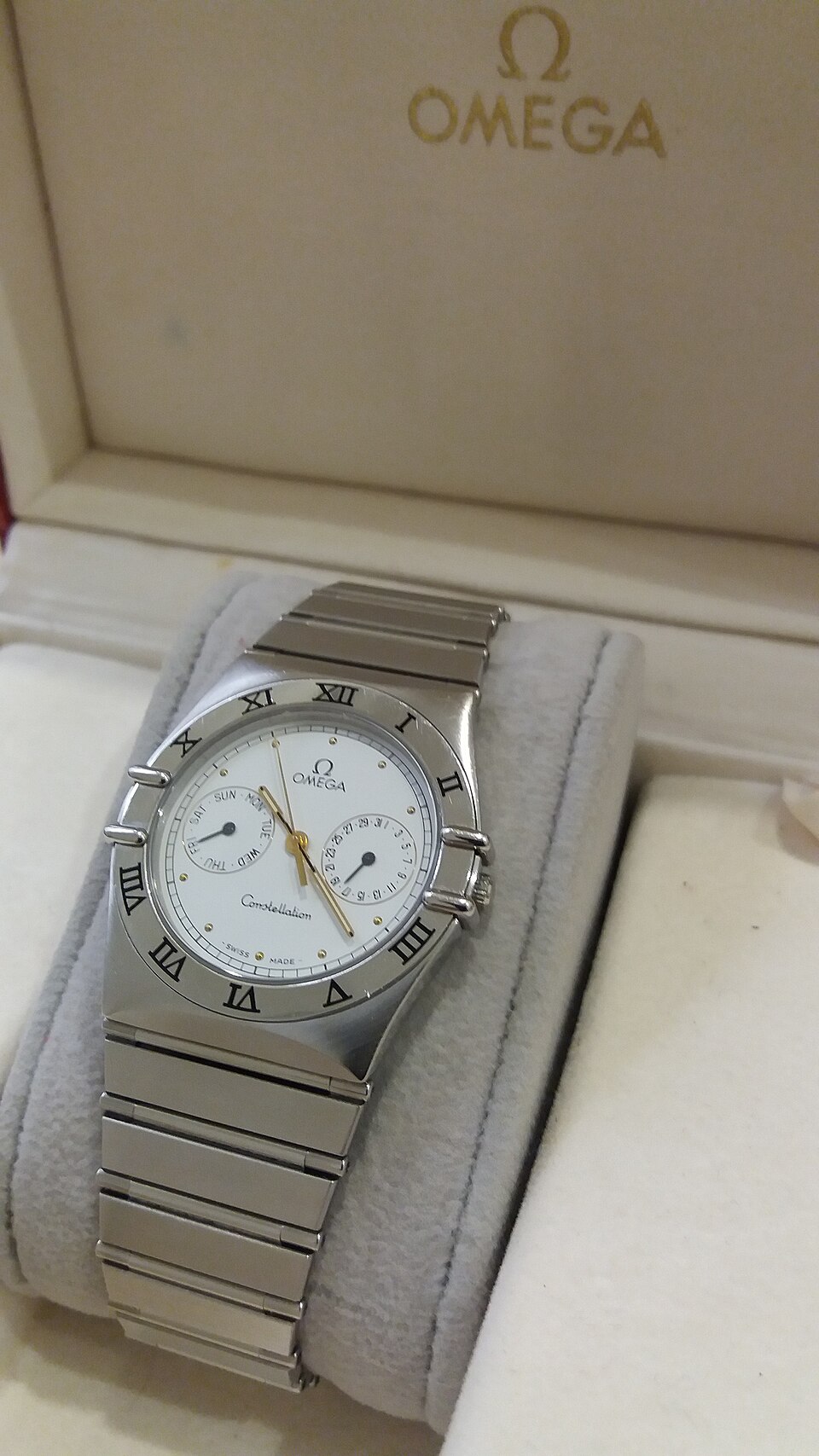
In 1982 Carol Didisheim's Constellation Manhattan replaced the bezel with four screwed claws at 3 and 9 o'clock that clamped crystal and gasket to an ultra-thin case. The idea came to product director Pierre-Andre Aellen from his bathroom mirror, held to the wall by claws. Quartz calibre 1422 came first, with automatic versions from 1984.
- 1995 to 2014
My Choice, Double Eagle, makeovers
In 1995 the Roman numerals moved from the crystal to the bezel and the My Choice campaign featured Cindy Crawford and Martina Hingis. The Double Eagle took Omega's co-axial calibre 2500 in 2003, the first Constellation to do so. A 2009 makeover refined the claws and bracelets and steered the Manhattan toward women's sizes of 29, 28 and 25 mm.
- 2015 to today
Master Chronometers and flush claws
The 2015 Globemaster brought back the pie-pan dial and was the first Master Chronometer. In 2020 a 41 mm Constellation kept the claws of the 1982 Manhattan as a design signature, with hands inspired by New York's One World Trade Center.
✦The Manhattan's claws trace back to a morning shave: product director Pierre-Andre Aellen saw that his unframed bathroom mirror was held to the wall by eight claws and adapted the idea to hold the crystal without a bezel.
✦Because of restrictions on the Constellation name in the United States, Omega sold some Constellations there as Globemaster from 1953. Omega revived that name for the 2015 model.
✦At Baselworld 2015 the Globemaster became the first watch built to the METAS Master Chronometer standard, tested to run within 0 to +5 seconds a day after exposure to 15,000 gauss.
✦The Constellation Electroquartz f8192 Hz of 1970 cost CHF 5,400, the same as a new Volkswagen at the time.